
If you’ve heard the words “IMAX” or “Dolby” or possibly even “ScreenX” run through the conversation in the past couple months, you may have been confused or left feeling like there's something you’re missing. But worry no longer, because within this article contains the power to know all the types of gigantic, advanced, and strange types of film formats. So what is a film format? I’m sure when scrolling through social media earlier this July you saw videos talking of The Odyssey, Christopher Nolan's newest epic film and how it should absolutely be seen in IMAX 70mm. Now “IMAX” is just one of the many different film formats that have been popping up all over the world. They are a special way in a special auditorium to see a new movie. Each one contains different features that provide an experience that can only be had inside an auditorium of that formatting.
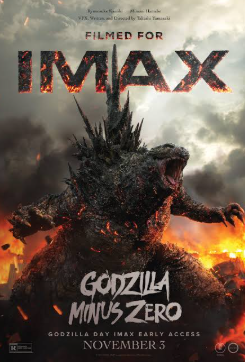
Starting with the star of the show, IMAX seems to be the talk of the movie-going world nowadays. On posters you may see the words “Filmed for IMAX”. In easy terms this typically means that the movie on the poster was filmed with special IMAX cameras. These cameras are built to film much sharper and wider pictures that can be displayed only on special IMAX projectors. They create bigger and better films but because of the limited availability of IMAX equipment, most films aren’t shot with IMAX cameras in mind. Most of them however, still show in IMAX anyway. Being the massive success it is, IMAX pulls in a strong amount of money for any movie showing in the format. That’s why advertisers have been urging the viewer to “Experience it in IMAX”, and it was this race to get people to spend money in IMAX theaters that shot the film formatting market to the moon.
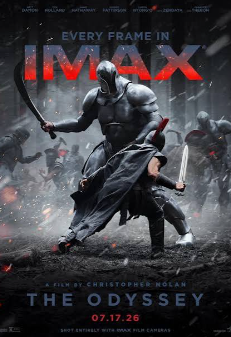
The Odyssey became famed not just for its extraordinary cast, crew, budget, and scale; but it was the very first film in history to be shot every single scene entirely with IMAX cameras. If you’re wondering why this hasn’t been done before it’s important to note that IMAX cameras are absurdly large, they’re also absurdly loud which makes filming quiet dialogue scenes difficult, and they can only remain rolling for 3 minutes before the film runs out and needs to be reloaded. It's also important to note that IMAX as a movie-making format is not recent, in fact it’s been around for almost 60 years. But it has been popularized only recently because of its ability to make studios wheelbarrows of cash.
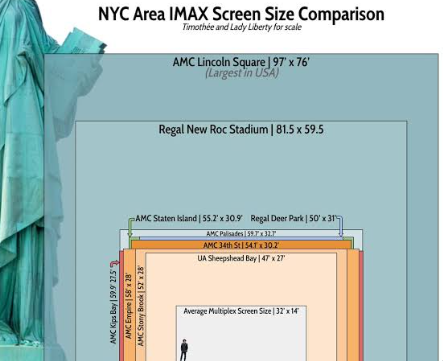
The comparison between standard auditoriums and IMAX 70mm
I’m also sure you know about “Dunesday”. This December the two biggest movies of the year will release on the same day; Avengers: Doomsday and Dune: Part Three. Because of the amazing profits that IMAX showings pull, the Dune team secured all IMAX showings for that opening weekend, blocking Avengers: Doomsday from using any IMAX auditoriums at those times. In rebuttal, Marvel Studios released Infinity Vision. This is not a new film format, but rather a quality guarantee from Marvel, ensuring that your experience in an Infinity Vision theater will be comparable to that of IMAX, featuring a screen width of at least 45 feet, laser projection, and immersive surround sound audio. Where to find an Infinity Vision showing is more unpredictable however, unlike other formats that require the building of entirely new auditoriums, because of the short time they had, Infinity Vision showings will run out of already existing auditoriums and formats. This could prove to be strange because if you’d want to see Avengers: Doomsday in a Dolby auditorium, it would be labeled as Infinity Vision.
Now you might think: what is Dolby? It’s yet another special format of film that focuses on in-auditorium features. It can improve the quality of any movie within their auditoriums with dual laser projection, allowing sharp, vibrant, and contrasting colors with impressive brightness that allow for a clearer, more immersive image. It has surround sound that can play high quality noises from almost any spot around the auditorium and a dark design that reduces light pollution so the movie may completely absorb the audience. The seating is spacious and the chairs recline smoothly and quietly with bass rumblers below the seats. Overall Dolby Cinemas can vastly improve any movie in any theater, because of its widespread availability Dolby has become the golden standard for showing movies across the globe. But the introduction of Dolby Cinemas sparked a new public interest in accessible and improved auditoriums, and so with Dolby came Prime at AMC, and XL at AMC, and Laser at AMC, and RPX, that are all some combination or variation of laser projection or large screens or bass rumblers below the seats. But eventually these new film formats stopped making money. Eventually cinemas had to start getting a little more creative, and so the new film formats got a little bizarre.
RealD 3D brings in a new way of viewing your favorite movies, in 3D. In the endless chase for immersion, to help the audience escape from reality, theaters began offering RealD 3D showings of any movie they could. They’ll give you a pair of 3D glasses before you go in and your movie-going experience is guaranteed to bring a new, immersive experience to all.
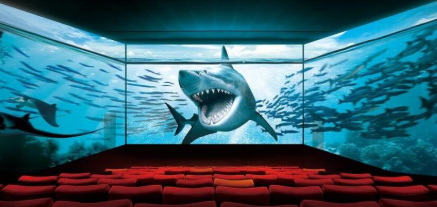
One of the more unique film formats is known as ScreenX. It shows a film projected not just on one large screen but across three separate screens covering the sides of the room. Claiming to fully immerse you in the film, ScreenX is one of the newest and most powerful types of film. It was marketed especially for the release of Spider-Man: Brand New Day, and came at a success of 14.4 million dollars just upon opening weekend. Many remarked that “ScreenX was a fun novelty”, but audiences complained that the screens on the sides would only come on during select action sequences. This same inconsistency is still present within IMAX showings, because most of the time only around 10-30% of the film is actually recorded with IMAX cameras, but the sudden and jarring change from one screen to three caught viewers off-guard. Even when the side screens did come on, audiences complained. According to the viewers the projections on the sides were a noticeably lower quality than that in the middle. Many viewers also claimed to have experienced motion sickness or dizziness during their showings. Most certainly enjoyed the immersion of the ScreenX theaters, but it came to them at a high price.
But it turns out that 3D wasn’t enough, viewers needed to feel every gunshot and every car drifting, and every kiss shared, a film format so extreme and chaotic, it left audiences completely shocked, from the same team that created ScreenX; 4DX will bring the audience into the film with brand new 4D features that will cause your seat to pitch, roll, heave, yaw, twist, shake, and vibrate along with the film. This format was widely popularized with videos of people on social media claiming to have accidentally bought 4DX tickets to The Odyssey and being surprised at the violent shaking they felt throughout the entire movie. The makers of the 4DX effects work personally with the directors before the films release to determine what scenes will cue which movements and other features to immerse the 4DX audience into the directors intended vision.

However people have frequently left their 4DX theaters stating they felt as if they got beat up by the movie, and with an especially intense film like The Odyssey; considering the length of the film as well, it’s no surprise that the people on the internet have grown to see 4DX viewings as more of a challenge than a movie experience. The seats will also use thumpers to “punch” the viewer from behind. Ticklers are small tubes at the bottom of the seats by the ankles that will slap the viewer. There are tubes in the head of the seat that might fire the viewer with compressed air when an arrow or gunshot is fired. The seats in front of you will simulate wind by blowing air on your face, the top of your seat could fire water and let it rain down on you to simulate stormy weather, and for more weather there are fans on the ceiling that will create wind and sometimes spray water or snow into that wind to create a theatrical rain or snow effect. The room could also release scents, fog, smoke, cold air, bubbles, and use strobe lights to give the viewer a headache just all that much more.
I hope I’ve made it clear enough that I, personally, resent the booming industry of film formats. I love movies, but the pursuit for the most immersive cinematic experience feels consistently redundant. Director Martin Scorsese faced backlash quite a while ago for stating that he felt “Marvel movies are not true cinema and instead feel more like theme park rides,” and over time I’ve come to understand further and further what he meant. So many movies nowadays feel like they were made purely for entertainment; for money and not from the heart. As people treat every aspect of life with a little less care in this technological world the art of movies seems to have been lost underneath the fog and bubbles. Now I’m all for allowing creative expression outside the boundaries of the silver screen, but sometimes I wonder: is the cost of immersion to film an entire movie with a loud and enormous camera, to make Godzilla roar so resoundingly you lose your hearing for the next 5 hours, and to give your audience a heart by throwing them around in a motion chairs? Because if so, I think I prefer the cheaper theaters anyway.
