
With today's ultra-processed foods, our diets are dramatically different from those of someone in the 1800s; the food we eat would shock someone living back then. Today, I want to know how much of a shock their bodies would feel if they consumed the food we eat regularly without issue.
What was the diet of a Victorian child?
During the Victorian era (1837-1901), the diets of children varied by class and region, but for a lower-class family in a city, their diets were grim. The average lower-class child ate ~600 calories and didn’t have access to much fresh produce or meat; they often ate bread with simple soups and broths with little flavoring. A common breakfast meal was weak black tea and bread (more often than not the bread was stale), gruel, or something called water porridge, boiled oats in hot water with salt, though sometimes children weren’t able to eat breakfast due to several reasons.
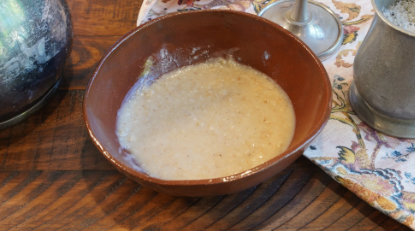
An image of gruel.
Typically, children weren’t given a break for a midday meal, so they ate at their work stations, while walking between their tasks, or while hiding from their overseers, though if caught hiding, the children would most often be beaten. One of the most common lunches eaten by the children working in factories was bread and drippings soup. Drippings soup was a thin broth made from the leftovers from a Sunday roast made by the neighborhood’s baker. Henry Mayhew recounted that kids oftentimes dipped their bread into the broth to soften it up so that they could chew it safely, due to the children not having the strength or energy to chew the hard, stale bread.
After their shift that lasted around 12 to 14 hours was over, they were finally able to eat their dinner. A common dinner was a dish called poor man’s scouse, a cheap but filling meal that provided a majority of the day’s calories. The meal consisted of a minuscule amount of meat cooked with a bit of butter with some vegetables like potatoes and onions; then water was poured in and left to simmer. The kids were only given one or two small helpings of this soup, but it was also served with more stale bread and another cup of weak black tea.
What was a Victorian Era child’s life like?
Children were often made to do jobs that the adults couldn’t do or couldn’t do as well. Common jobs included working in the mines, working urban jobs, working in fields, and working in factories. For the purposes of today, we’ll only be looking at life in the coal mines due to the importance and danger of the job. Children in the mines worked many various jobs depending on their ages. The youngest would be trappers, typically the youngest of the family. These kids would sit in the darkness with strings attached to trapdoors; when they heard a coal cart coming, they would open the trapdoor to let out the toxic fumes and air.
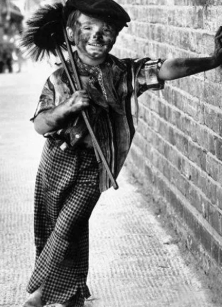
A child chimney sweep.
The older children would be hurriers and thrusters; hurriers would have a leather belt with a chain attached to it and a coal cart weighing hundreds of pounds, and would crawl through tunnels less than two feet tall to transport the coal. Thrusters pushed the cart from behind while crawling; they used their hands and heads to push the cart with the hurrier. The oldest would guide horses and ponies with the much heavier coal trams out the side of the mountain. Some kids worked on the outside of the mine, sorting through the coal on conveyor belts, taking out impurities like slate and regular stones from the oncoming coal. Some of the oldest and strongest would do actual mining themselves, but that was usually the adults’ jobs.Because of this, children who worked in the mines often experienced skeletal deformation and developed black lung. This significantly weakened them and their immune systems, as well as their senses, due to them working in the dark for hours each day.
Their home life wasn’t much better. Due to their long hours, children didn’t do much at home besides eat and sleep. They often lived in extremely cramped tenements where up to 17 people lived in one room; they also were in disrepair and dirty, and there was often no plumbing. Sickness spread quickly in these tenements because of overcrowding and dirty conditions. Because there was often no running water in the tenements, the inhabitants had to go to a communal well outside that was often dirty and unsafe to drink.
Medicine of the era…
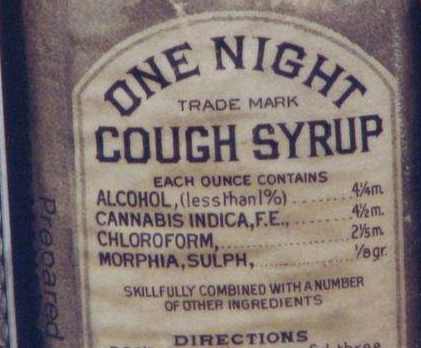
Victorian-era cough medicine.
About 50% of the child population died before their fifth birthday due to several reasons, but sickness was the most common. Due to the rapid spread of illness in the tenements and the unsanitary conditions, as well as bad food that they had to eat, many children got sick or developed infections in their intestines.
To try and reduce the chances of child death, families used a wide range of medicines and remedies that were said to be able to fix them; unfortunately, they did not. Common treatments for tuberculosis at the time were bloodletting and leeches, arsenic, turpentine, and sometimes even opium. Children at the time were given hard drugs like heroin (marketed as a non addictive cough medicine), cocaine (as an anesthetic), opium (to stop babies from crying), as well as strong alcohol, mercury, and arsenic. Also, snake oil salesmen sold unregulated drugs that were often just a mix of whatever they could find, and marketed them as miracle drugs that could cure a wide variety of illnesses and injuries.
Unfortunately, what doesn’t kill you doesn’t always make you stronger.
Nutrition of a TacoBell™ Crunchwrap Supreme©
The TacoBell Crunchwrap Supreme is the pinnacle of man’s hubris and gluttony. This is a monstrosity of “beef,” lettuce, nacho cheese, sour cream, tomatoes, and a big chip. This thing is 540 calories of cultural desecration, literally the same caloric value as what the average Victorian child ate in a day.
TacoBell seasons the Crunchwrap Supreme with chili powder, maltodextrin, sugar, salt, onion powder, garlic powder, disodium inosinate, guanylate, and other seasonings. I’m pretty sure a Victorian aristocrat couldn’t even handle the flavor of the Crunchwrap, let alone a poor kid coming from a 13-hour shift in the coal mines whose only eaten unseasoned water for their entire life.
Along with being 500 calories, it has 22g of fat, 25mg of cholesterol, 6g of fiber, 6g of sugar, 26g of protein, and 1200mg of sodium (that's 50% of the daily recommended limit). The Crunchwrap is a flavor bomb capable of destroying the taste buds of any Victorian child it comes across.
What would happen if you gave a Victorian child a TacoBell™ Crunchwrap Supreme©?
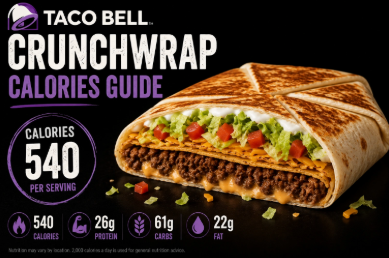
Nutrition of a crunchwrap supreme.
Now we’re at the fun part: would a Victorian-era child survive a TacoBell™ Crunchwrap Supreme©? To answer this, we need to look at the effects of giving ultra-processed food to people suffering from minor starvation. When feeding someone who has been starved, something called refeeding syndrome can happen. Refeeding syndrome is when someone starved of food starts to eat again but eats too much of the wrong foods such as solids and low nutrient meals, this can cause organ failure.
Because the body adapts to starvation by changing metabolism to reduce energy expenditure, if a food high in carbohydrates and sugars enters the body, insulin levels rise sharply, and that forces electrolytes out of the bloodstream and into the body’s cells. This can cause fatigue, muscle weakness, and cramping. Also, because of the rise in insulin levels, there will be a huge crash that will cause intense fatigue, dizziness, and shakiness.
The sodium alone could kill them, to be honest, because they ate foods with little amounts of sodium and often didn’t have access to salt; the 1200 mg of sodium in the Crunchwrap could overwhelm their bodies and cause hypernatremia. This could cause their kidneys to weaken, severe dehydration, brain swelling, seizures, and possibly death.
Because of their eating and drinking habits, Victorian children constantly had gut infections, and the sudden introduction of intense spices and fats could cause diarrhea and vomiting, which could lead to rapid dehydration.
The spices used in the Crunchwrap would most likely overload the child’s body and cause intense burning sensations in the mouth and throat, and would probably cause panic and possibly asthma attacks if the child was asthmatic.
So yes, a TacoBell™ Crunchwrap Supreme© could 100% kill a Victorian child, though it still depends on their social class, what they usually eat, and their jobs.
Image 1: (https://www.tastinghistory.com/recipes/gruel)
Image 2: (https://victorianchildren.org/victorian-children-in-victorian-times/)
Image 3: (https://airshipambassador.wordpress.com/2014/12/10/medicine2/)
Image 4: (https://www.tacobell.com/)
Thumbnail: (https://www.tacobell.com/)